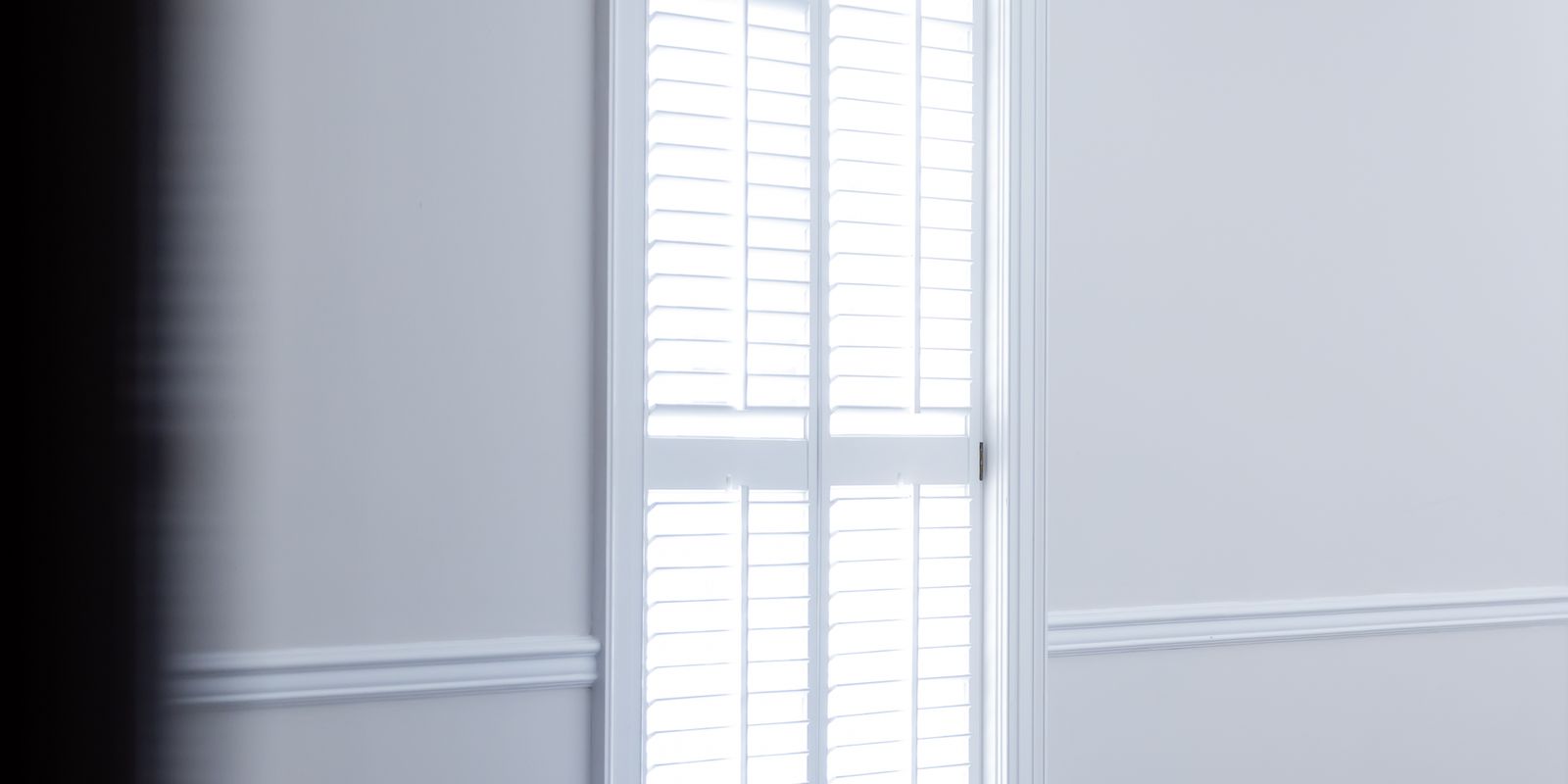
Plantation shutters are a long-term investment that stays with the house, so it is worth getting the details right. After thirty years of installing them across the East Valley, here is how we walk homeowners through the decision.
1. Louver size
Louvers come in 2.5, 3.5 and 4.5 inch widths. Smaller louvers suit smaller windows and traditional homes. The 3.5 inch louver is the most popular all-around choice. On large windows, 4.5 inch louvers mean fewer slats, a more open view and a more contemporary feel. A good rule of thumb: the bigger the window, the bigger the louver.
2. Material: wood or composite
Composite (poly) shutters are moisture-proof, dent-resistant and will not warp or yellow in Arizona heat. They are the right call for bathrooms, kitchens, laundry rooms and any window that gets hammered by afternoon sun. Basswood is lighter, which matters for very wide panels, and it can be stained to match your woodwork. Many homes use composite in the wet and hot rooms and wood elsewhere.
3. Frame style
The frame is what the shutter panels hinge to. An L-frame mounts inside the window opening for a clean look. A Z-frame has a lip that wraps the drywall edge and hides imperfections in openings that are not square, which is common in older homes. Decorative and bullnose frames add a finished, trim-like appearance. If you have no window casing, a frame with a decorative face gives the window a finished look.
4. Tilt rod
The traditional front tilt bar runs down the center of the panel. A hidden rear tilt moves the mechanism behind the louvers so the face of the shutter is clean and unobstructed, which most people prefer once they see it. Both work the same way: move one louver and they all move.
5. Color
White and off-white are the overwhelming favorites, and most HOAs require a neutral on street-facing windows. The right white depends on your trim. Bright white next to a creamy trim looks blue; creamy white next to bright trim looks dingy. This is exactly why we bring sample panels to your home and hold them against your trim in daylight.
6. Specialty shapes and doors
Arched windows can get a matching sunburst arch on top. French doors get panels with a cutout for the handle. Sliding glass doors use bypass shutters on a track or bifold panels. Closets can use louvered shutter panels as doors. If you have an unusual window, there is a shutter solution for it.
Check with your HOA first. Most East Valley associations care about the color visible from the street. Pull the rules before you fall in love with a stain.
A note on café shutters
Café style covers only the bottom half of the window, giving privacy at eye level while leaving the top open for light. It is a great look in kitchens and street-facing bedrooms, and it costs less than a full-height shutter.
Ready to see samples in your home? Book a free consultation and Larry will bring every louver size and finish with him.
Ready to see how it looks in your home?
Larry brings full-size samples to your door, measures every window and gives you a straight price. No showroom trip, no pressure.
Request your free in-home consultation.
Tell us a little about your project and we will reach out to set up a visit. Prefer to talk? Call or text anytime.
Phone
(480) 507-3333Hours
Monday to Saturday, 8:00 AM to 5:00 PM
In-home visits by appointment
Location
Mesa, Arizona
Serving the East Valley and greater Phoenix